
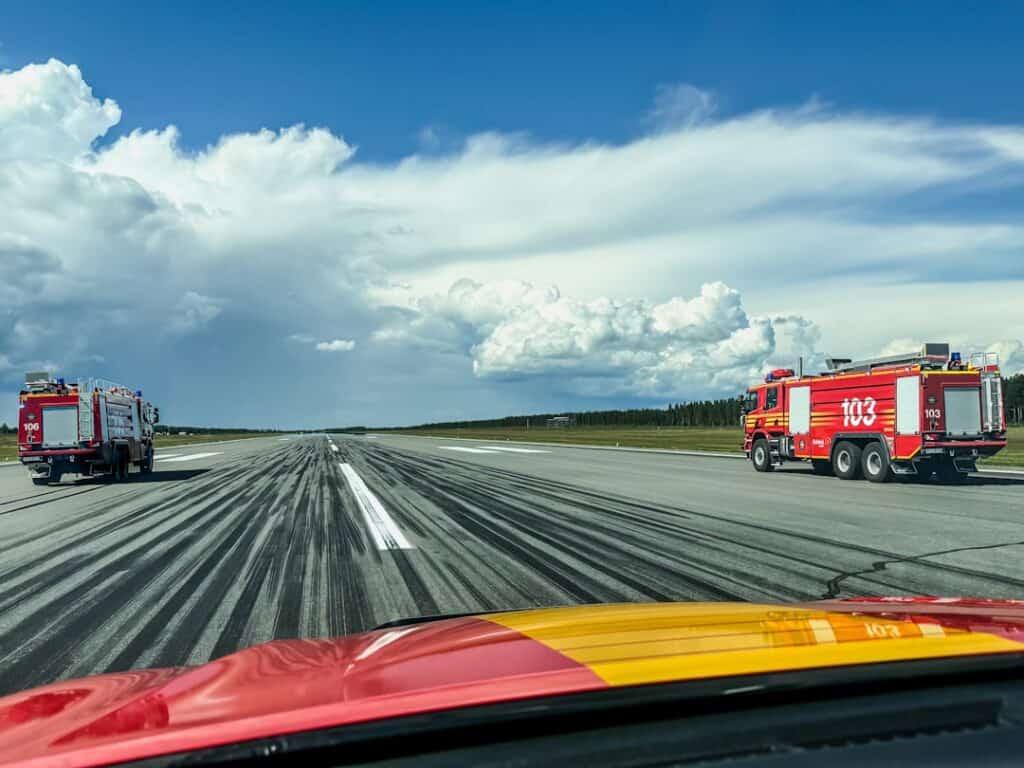
Sydney Airport has carried out a large-scale emergency exercise to test how airport teams and emergency services would respond to a serious aircraft incident.
The drill used a simulated domestic Boeing 737 emergency involving a suspected engine fire, an emergency landing and a simulated explosion after the aircraft stopped on a taxiway.
What crews tested
The exercise tested firefighting, evacuation and rescue procedures, passenger triage, casualty transport, emergency communications and support for passengers who were not injured.
That allowed different agencies to practise how information and responsibilities would move between teams during a complex airport emergency rather than testing one service in isolation.
Multiple agencies took part
Participants included Sydney Airport, NSW Police Force, Australian Federal Police, Fire and Rescue NSW, Aviation Rescue Fire Fighting Services, NSW Ambulance, NSW State Emergency Service and Airservices Australia.
Large airport incidents can require all of those organisations to work together while normal airport operations are also being managed.
Why airports run exercises
Sydney Airport says it conducts a major airport-wide emergency exercise every two years as part of its emergency-management program.
The purpose is to test existing plans under realistic pressure, identify gaps and give agencies experience working together before a real emergency occurs.
The scenario was an exercise, not an actual aircraft accident. The simulated fire, landing and explosion were created specifically to test the response arrangements.